Imagine furnizată de magazinul partener
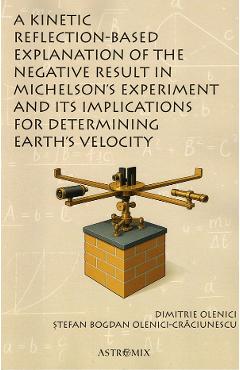
A kinetic reflection-based explanation of the negative result in Michelson's experiment and its implications for determining Earth's velocity - Dimitrie Olenici, Stefan Bogdan Olenici-Craciunescu
Editură / brand: stefan bogdan olenici-craciunescu
Preț în magazin
40,00 RON
LOfertă de la libris.roPrețul final se confirmă în magazin
Vezi oferta în magazin↗Vei fi redirecționat către site-ul partenerului. Disponibilitatea nu este garantată de TârgulDeCărți.
✓
Preț actualizatdin feedul magazinului
↗
Cumpărare sigurădirect de la partener
Alertă gratuită
Te anunțăm când scade prețul
Lasă numărul de WhatsApp și primești un singur mesaj când produsul devine mai ieftin.
Despre produs
Descriere
For more than a century, the Michelson-Morley experiment has stood as a cornerstone of modern physics - the “crucial experiment” that seemed to disprove the existence of the ether and paved the way for Einstein’s theory of relativity. Yet, what if Michelson’s famous null result did not mean the absence of the ether, but rather the limits of classical optics? In this groundbreaking study, Dimitrie Olenici and Stefan Bogdan Olenici-Craciunescu revisit Michelson’s experiment through the lens of kinetic optics - a new approach in which light reflected by moving mirrors behaves differently than in static conditions. Through detailed calculations, experimental data, and a critical re-examination of Michelson’s assumptions, the authors show that the absence of fringe shifts can be fully explained by the phenomenon they call kinetic reflection. Combining historical analysis, theoretical rigor, and original experimental results, this book invites readers to reconsider one of the most iconic experiments in the history of science - not as a failure, but as a door toward a deeper understanding of light, motion, and the nature of space itself.