Imagine furnizată de magazinul partener
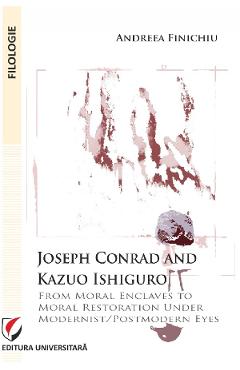
Joseph Conrad and Kazuo Ishiguro. From moral enclaves to moral restoration under modernist/postmodern eyes - Andreea Finichiu
Editură / brand: Andreea Finichiu
Preț în magazin
15,87 RON
LOfertă de la libris.roPrețul final se confirmă în magazin
Vezi oferta în magazin↗Vei fi redirecționat către site-ul partenerului. Disponibilitatea nu este garantată de TârgulDeCărți.
✓
Preț actualizatdin feedul magazinului
↗
Cumpărare sigurădirect de la partener
Comparator de prețuri
1 ofertăAlte oferte pentru acest produs
Potrivire automată după titlu și editură. Verifică ediția și detaliile în magazin înainte de comandă.
Cel mai bun prețlibrariadelfin.roJoseph Conrad and Kazuo Ishiguro. From moral enclaves to moral restoration under modernist/postmodern eyes - Andreea Finichiu
14,27 RONVezi oferta ↗
Alertă gratuită
Te anunțăm când scade prețul
Lasă numărul de WhatsApp și primești un singur mesaj când produsul devine mai ieftin.
Descriere
A period of approximately 60 years separates Conrad's last complete novel (The Rover, 1924) from Ishiguro's first (A Pale View of Hills, 1982). And yet, despite spanning an expanse of moral agnosticism, through modernist and postmodern/contemporary times, respectively, their literary work can be considered to renegotiate what has sedimented into our collective conscious as standards of morality and, ultimately, humanity. They are, for this reason, enclaves - they team up across decades to dare differ from the general tenets of the movements they inhabit. The moral restoration is a proposed counter-movement to the anaesthetic trends of 20th and 21st-century overexposure and normalization of violence, trauma, and oppression discourse and narratives. Here, moral is not to be understood as a reactionary, dogmatic kind, but rather as sensitizing and self-regulating. We are never told what to do, but we are encouraged to ruminate on what we are told and, equally important, what is left unsaid. This book aims to map the inception of the proposed counter-movement by referring to the Japanese Ma aesthetics of negative or empty spaces, the case of dystopia’s sensitizing ends, as well as a number of psychoanalytic and cross-literary observations in analysing Joseph Conrad's Falk: A Reminiscence and Kazuo Ishiguro's Klara and the Sun, Never Let Me Go and The Remains of the Day.