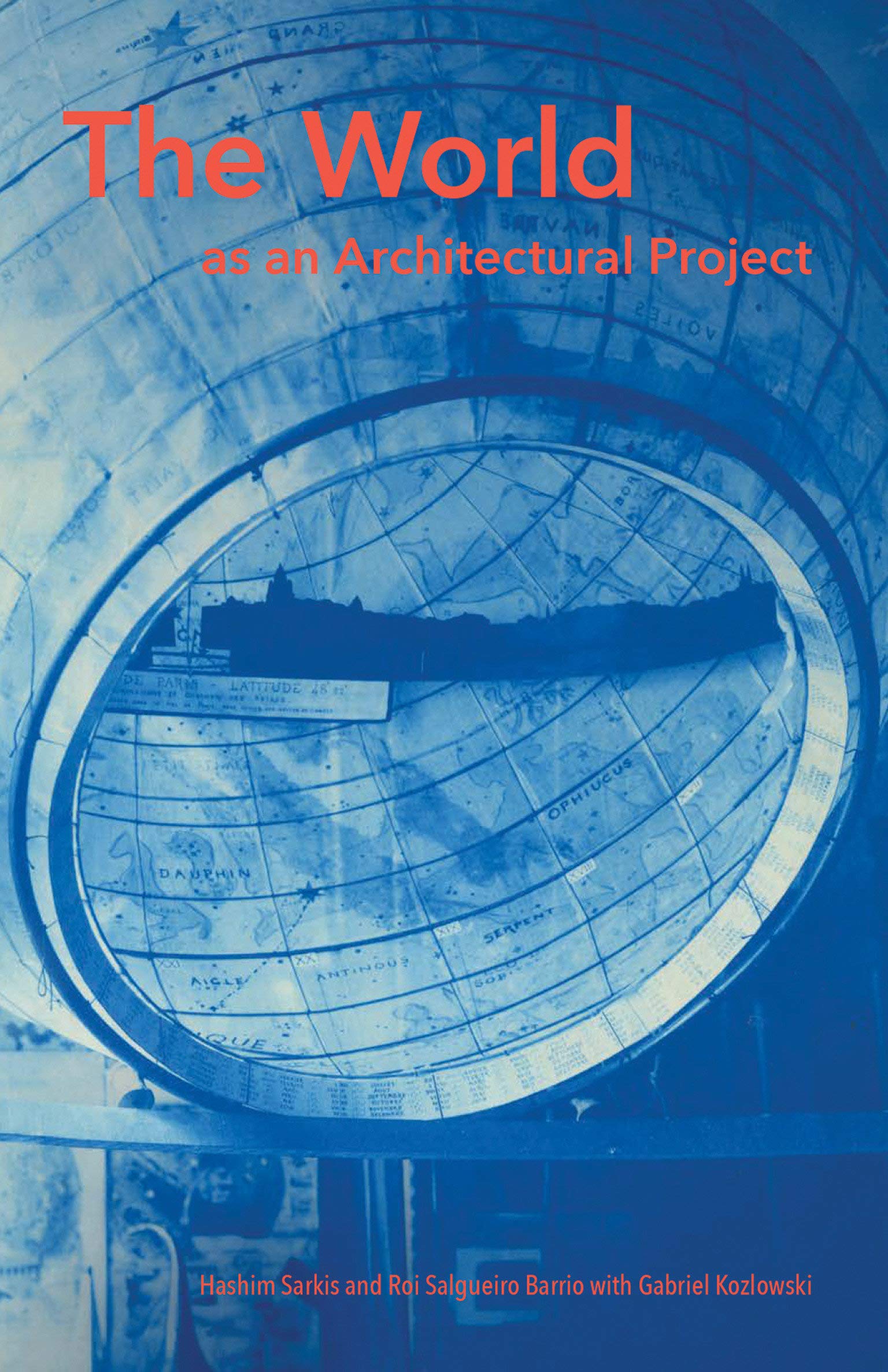
Imagine furnizată de magazinul partener
The World as an Architectural Project | MIT) Hashim (Dean Sarkis, Massachusetts Institute of Technology) Roi Salgueiro (Research Associate Barrio
Editură / brand: MIT Press Ltd
Preț în magazin
236,00 RON
COfertă de la carturesti.roPrețul final se confirmă în magazin
Vezi oferta în magazin↗Vei fi redirecționat către site-ul partenerului. Disponibilitatea nu este garantată de TârgulDeCărți.
✓
Preț actualizatdin feedul magazinului
↗
Cumpărare sigurădirect de la partener
Alertă gratuită
Te anunțăm când scade prețul
Lasă numărul de WhatsApp și primești un singur mesaj când produsul devine mai ieftin.
Descriere
Architects imagine the planet: fifty speculative world-scale projects from Patrick Geddes, Alison and Peter Smithson, Kiyonori Kikutake, Juan Navarro Baldeweg, Luc Deleu, and others.The world's growing vulnerability to planet-sized risks invites action on a global scale. The World as an Architectural Project shows how for more than a century architects have imagined the future of the planet through world-scale projects. With fifty speculative projects by Patrick Geddes, Alison and Peter Smithson, Kiyonori Kikutake, Saverio Muratori, Takis Zenetos, Sergio Bernardes, Juan Navarro Baldeweg, Luc Deleu, and many others, documented in text and images, this ambitious and wide-ranging book is the first compilation of its kind.Interestingly, architects begin to address the world as a project long before the advent of contemporary globalism and its assorted anxieties. The Spanish urban theorist and entrepreneur Arturo Soria y Mata, for example, in 1882 envisions a system that connects the entire planet in a linear urban network. In 1927, Buckminster Fuller's "World Town Plan--4D Tower" proposes to solve global housing problems with mobile structures delivered and installed by a Zeppelin. And Joyce Hsiang and Bimal Mendis visualize the conditions of a worldwide "City of Seven Billion" in a 2015-2019 project. Rather than indulging the cliche of the megalomaniac architect, this volume presents a discipline reflecting on its own responsibilities.